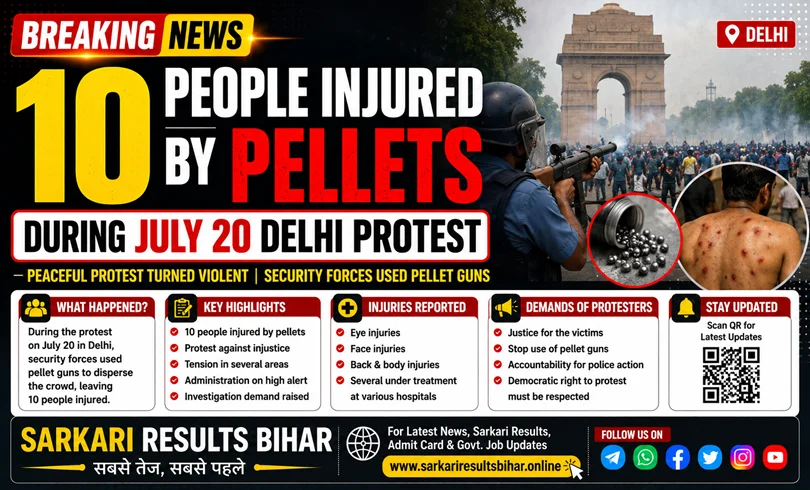
New Delhi: At least 10 people suffered pellet-related injuries during the July 20 protest at Jantar Mantar in Delhi, according to responses received under the Right to Information (RTI) Act from two hospitals.
The findings have added fresh questions to the controversy surrounding the use of force during the protest, particularly after Delhi Police denied that pellet guns were used against demonstrators.
The July 20 protest, organised by the Cockroach Janta Party (CJP), witnessed a heavy police presence as protesters marched in the national capital. Several participants later reported injuries that they said were caused by pellets.
According to the RTI responses obtained from two hospitals, at least 10 people were treated for injuries consistent with pellet exposure following the protest. The information provides hospital-record evidence of injuries reported after the confrontation.
The issue has become particularly contentious because Delhi Police has maintained that pellet guns were not used during the crackdown. However, reporting has pointed to other official records and visual evidence that have raised questions over the police account.
A general diary entry at Parliament Street police station dated July 20 reportedly recorded that Rapid Action Force (RAF) personnel fired two rounds from an anti-riot gun loaded with cartridges containing pellets on the directions of a Deputy Commissioner of Police-rank officer. The Central Reserve Police Force (CRPF), which controls the RAF, has also initiated an inquiry into the alleged use of pellet guns.
The controversy has also reached the Supreme Court, where a petition has sought restrictions on the use of pellet guns for crowd control against civilian protesters. The petitioners have questioned whether such weapons are authorised under the existing crowd-control guidelines applicable in Delhi.
The RTI findings are significant because they provide an independent documentary trail through hospital records, even as questions remain over exactly how the injuries were caused and who was responsible.
The incident has renewed debate over the proportionality of police action during public demonstrations and the safeguards that should govern the use of less-lethal weapons.
With the reported RTI responses and ongoing inquiries now in the public domain, pressure is likely to increase on authorities to clarify what weapons were used on July 20, under whose orders, and whether their deployment followed established crowd-control procedures.